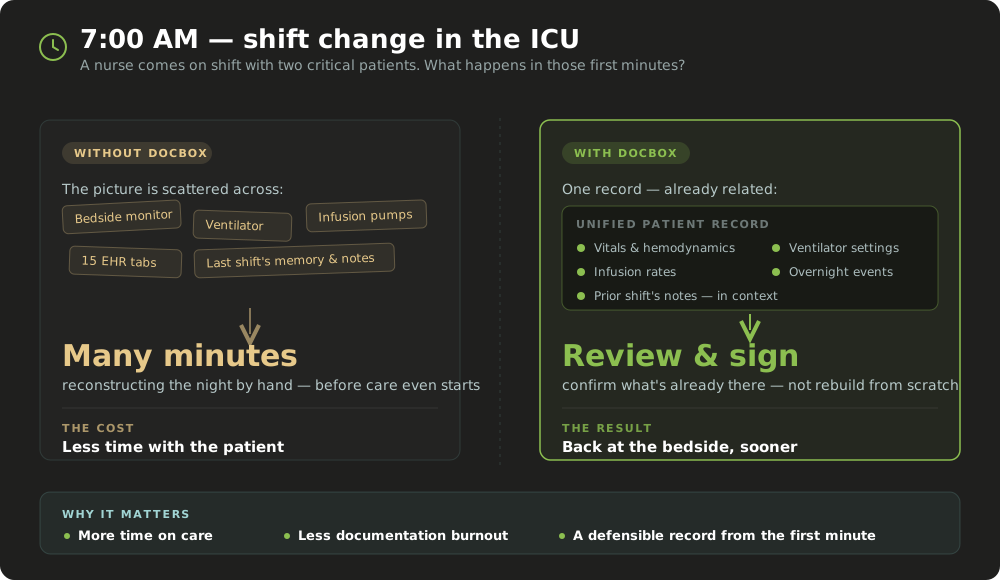
That twenty minutes is built on transcription. ICU nurses document a fraction of the parameters connected devices already capture. The rest is scattered across the device, the EHR, and the previous shift's memory. The gap consumes significant time every shift, drains morale, and pulls nurses away from the only work they can do.
With DocBox: the oncoming nurse sees one unified clinical record. Every device reading sits next to the assessment of it; vitals, ventilator settings, infusion rates, hemodynamic measurements, and the previous shift's documentation are already related — not stitched together at handoff. The nurse's role becomes validation rather than synthesis. Hunt-and-search time collapses; the patient flowsheet is the single source instead of the reconstruction target.
- Real-time device data populates the patient flowsheet — no manual re-entry
- Reduces charting time and mouse-click fatigue across every shift
- Bedside capture of procedures and observations at the point of care
- Documentation by body systems with the assessment tools clinicians actually use
- Defensible records generated as care is delivered — no end-of-shift catch-up
- Removes the clerical burden that drives burnout and turnover
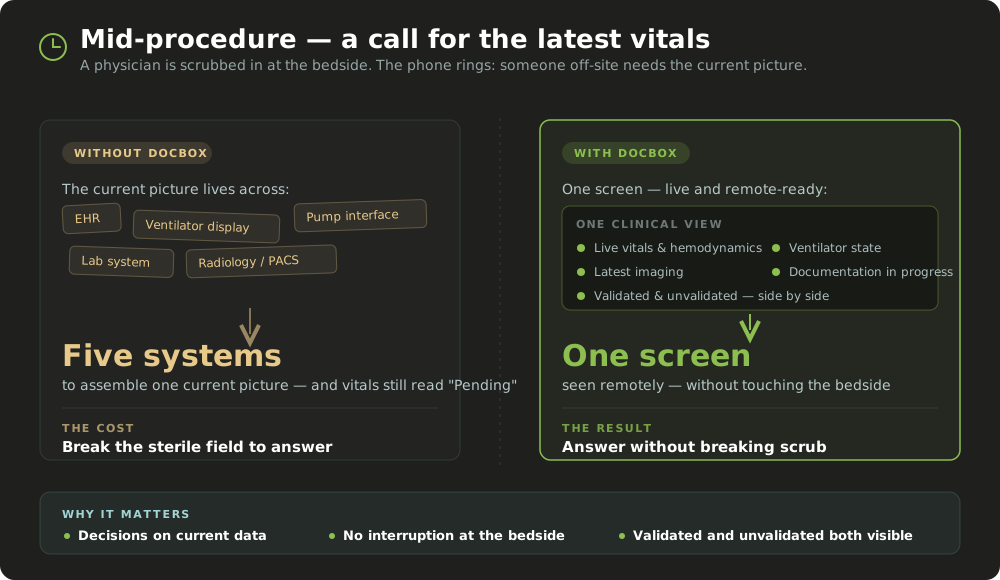
Critical decisions require complete, current data — but in most ICUs that picture is assembled across five systems: the EHR, the ventilator display, the pump interface, the lab system, and radiology. By the time it's assembled, it's already outdated. And when an unvalidated value lives only in the EHR, the remote physician can't see it without interrupting the bedside team.
With DocBox: a remote view lets the off-site physician see live bedside data, the validated and unvalidated states alongside each other, the nursing documentation in progress, and the patient's full worklist — without breaking the sterile field at the bedside. Bedside data, remote access, one screen.
- Single screen consolidates device data, labs, imaging, and EHR context in real time
- Hemodynamic trends, ventilator waveforms, and medication history at a glance
- Validated and unvalidated data states distinguished in the same view
- Diagnostic imaging accessible directly from the bedside screen
- Same view available remotely — without disrupting the bedside
- Roadmap: augmented intelligence to flag deterioration — designed to support, never replace, clinical judgment
IT teams evaluating ICU technology face two recurring problems: solutions that require proprietary hardware and create vendor lock-in, and platforms that expand the hospital's security footprint in a threat environment that already gets the most board-level scrutiny.
DocBox is built on a standards-based architecture designed to reduce proprietary lock-in and support vendor-neutral integration, without an added middleware layer. It integrates with existing devices, EHRs, and network infrastructure without replacing any of it. Data stays in the hospital. Access, retention, and downstream use — including AI training — are entirely under the hospital's control.
- Standards-based architecture throughout — designed to reduce proprietary lock-in
- Bidirectional EHR integration with no manual bridging or middleware
- Enterprise-grade security built into every layer — encryption, access controls, audit logging
- Extensive device driver library — connects to most ICU equipment already in use
- Hospital data ownership — access and downstream use designed to stay under the hospital's control
- Standards-based architecture designed to reduce proprietary hardware lock-in
"Does it work with Epic?" Yes — bidirectional integration designed to minimize manual bridging. "Do we have to replace our monitors?" No — DocBox connects to what you have. "Who owns the data?" Your hospital — full data ownership is part of the DocBox model and our deployment commitment. "What's the security posture?" Enterprise-grade, built in, with full audit logging and access controls at every layer.
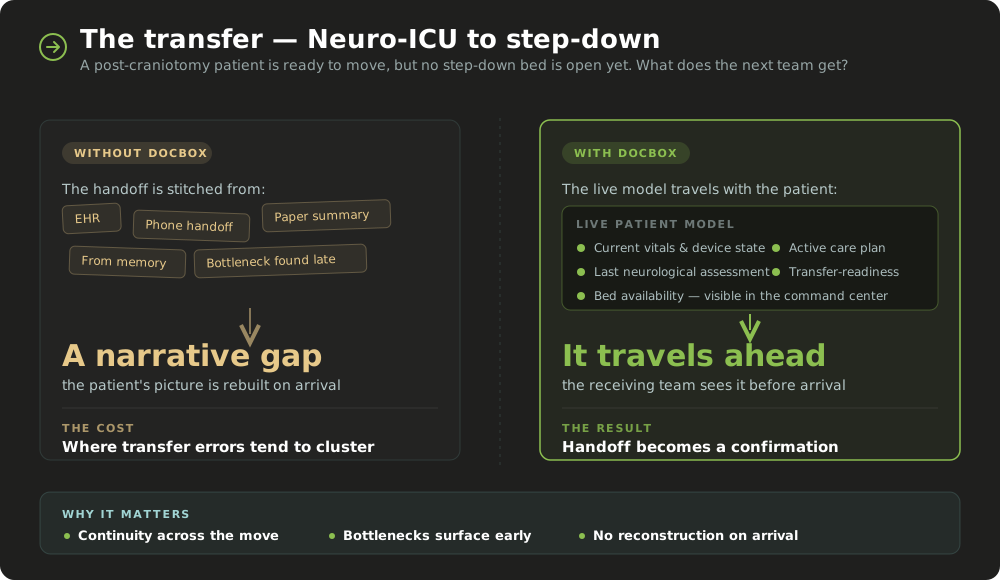
The structural problem is two-sided: not every site can staff an intensivist around the clock, and not every transfer can wait for paper handoff to catch up. Traditional Virtual Care offerings add another vendor stack and another lock-in.
This scenario is what DocBox Virtual Care is built to address. The live patient model travels with the patient. The bed-availability bottleneck surfaces in the command center before the bedside team has to escalate it. Transfer-readiness, current device state, last neurological assessment, and active care plan move as a single unit; the receiving team sees the full model before the patient arrives. One centralized hub can oversee multiple facilities — academic, community, or rural — through a single worklist, with vendor-agnostic video and views configurable by unit and specialty.
- Unit overview surfaces transfer delays and acuity changes in real time
- Pre-transfer record travels with the patient — no narrative handoff gap
- Multi-patient worklist with live vitals, location, and acuity across facilities
- Vendor-agnostic tele-consult — bidirectional audio/video, PTZ camera, PACS imaging
- Worklist with validated and unvalidated data states preserved
- Configurable by unit and specialty; use and quality analytics for network performance
* The Joint Commission, Sentinel Event Alert 58: Inadequate Hand-off Communication (2017) — communication failures are associated with up to 80% of serious medical errors.